



In a new session, the Higher Council of the UNR confirmed the date of the University Assembly, the schedule of student elections 2026 and made progress in expanding training in Human Rights.
In the North Hall of the Government Headquarters of the Universidad Nacional de RosarioA new session of the University Council was held. During this session, the dates for the University Assembly, which will take place next month, and for the 2026 student elections were set.
The University Assembly will be held on December 18th, starting at 8:00 AM, at the Faculty of Exact Sciences, Engineering, and Surveying. This is the highest governing body of the University. It is composed of all members of the University Council and the Faculty Governing Councils. It meets at least once a year and is responsible for setting university policy, amending the university statutes, electing the Rector and Vice-Rector every four years, and establishing the institution's internal regulations. It also reviews the annual report submitted by the University Council.
Furthermore, the student elections will be held on March 30, 31 and April 1, 2026, a space where students from all academic units of the University elect their representatives.
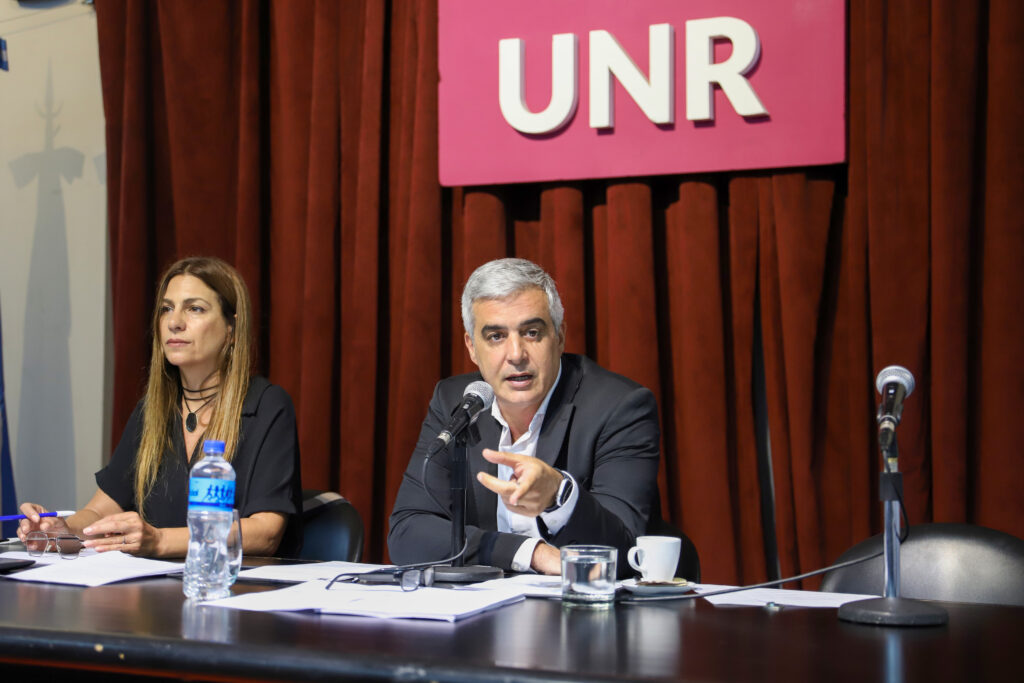
In other news, Rector Franco Bartolacci noted that next Saturday, November 29th, marks the 57th anniversary of the National University of Rosario (UNR). “In a year that has been very challenging in every way, I want to highlight the commitment of the entire university community to ensure that the University continues to operate and provide quality education. On Monday, December 1st, at the National Flag Monument, we will recognize individuals who, for various reasons, have distinguished themselves throughout the year in diverse activities representing our University—what we call the UNR Pride Awards. We have done this in previous years, and we believe it is a good opportunity to highlight the value and impact of the UNR.”
Finally, he mentioned the budget debate in the National Congress. “Apparently, there is now a decision to address the 2026 budget in extraordinary sessions. This means it will have to be discussed again in committee and reviewed again. We are working with the National University Council to incorporate some modifications into the bill, to achieve as much as possible given the current circumstances. This is an objective we have to have at least some minimal predictability regarding the budget we will be working with next year, since the current one falls far short of what we need.”
More training in Human Rights
During the session, a project to mainstream a human rights perspective across all degree programs was unanimously approved. “Our University has a significant responsibility regarding human rights and human rights education. In agreement with various faculties that already offer courses related to this topic, this initiative aims to make the courses offered by the Faculty of Political Science and International Relations, the Faculty of Humanities and Arts, the Faculty of Psychology, and the Faculty of Law available to all students in the UNR community. This complements the existing ordinance supplementing the degree program,” explained Paula Contino, head of the Human Rights Area at UNR.
Contino explained that, in principle, it is an elective course because “thinking about curriculum development and reforming all study plans was an extremely ambitious situation, and so it seemed to us that this was a sure first step since these are already installed, formative and disciplinary capacities that these four faculties have in principle, and to make them available.”
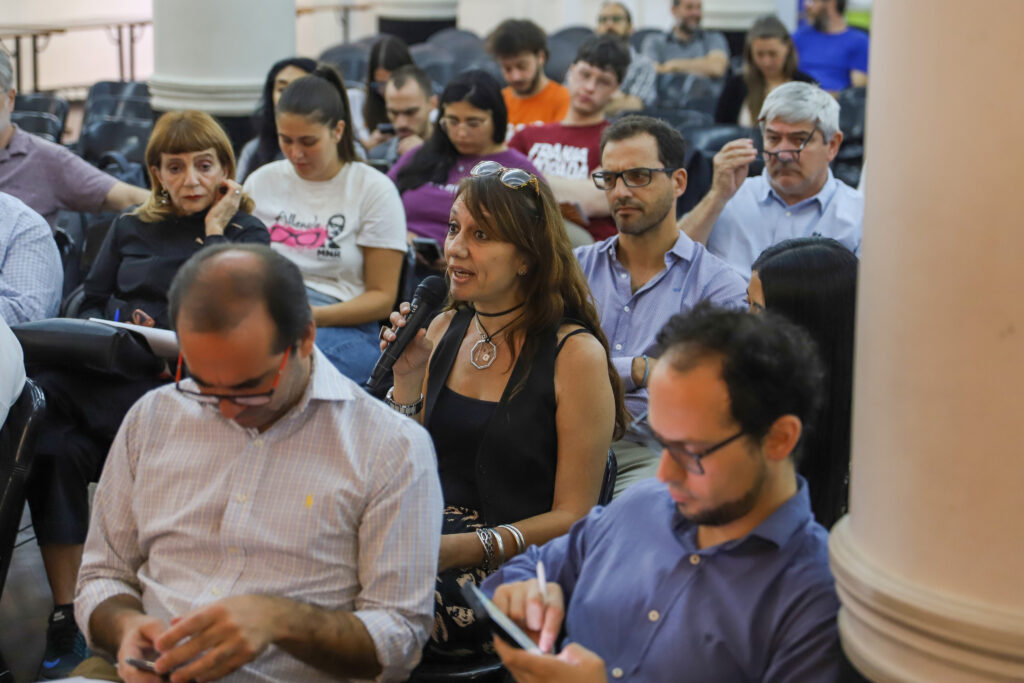
The resolution also anticipates that, in time, if another faculty is able to develop a subject in a specific field related to Human Rights, it may join this initiative.
The University's Academic Secretary, Carina Gerlero, emphasized the immense value of maintaining ongoing dialogue about curricula, both for curricular and extracurricular courses taken by students. “It is important to be able to discuss topics that we must continually address to keep memory, truth, and justice alive. This project, in our view, contributes to making pre-existing curricular spaces in some faculties available to all UNR students. And importantly, this path would be recognized through a supplementary degree ordinance, or, if a faculty so decides, it could also be offered as an elective course.”
“We believe this will facilitate not only training but also the mobility of our students. Sometimes they stay in one place for their entire degree and don't know the other academic units, and this would imply student mobility, exposure to other knowledge, putting into practice the possibility of interdisciplinarity, and also that the professor who receives these other students will also make room and be able to accommodate them,” Contino concluded.
Journalist: Gonzalo J. García / Photographer: Camila Casero.