



Under the theme "The Challenges of Public Policies to Reduce Social Inequalities in Health," this event encourages dialogue and debate among hundreds of professionals in this field.
Within the framework of the XIV Health Congress of the Municipality of Rosario, the First University Congress on Health was opened.
This Congress is established as a space for meeting, debate, and sharing on the collective construction of health in the city. In a context of economic, social, and health crisis, the event aims to serve as a bridge for reflection and knowledge exchange, with the goal of generating innovative and effective responses to the current challenges of the health system.
Aimed at healthcare and social workers, university students, and the general public, the event will take place over two days and feature prominent speakers from the healthcare field.
“Today's meeting must be an act of vindication of the public, of access to healthcare as a right, at a time when the most basic, the elemental, what we thought was beyond discussion, is once again being debated like few times before,” stressed Rector Franco Bartolacci, adding: “This history that this city has been able to build, like very few other places, fills us with pride and guarantees, here like few other places, that every person can access quality healthcare, regardless of where they were born, under what conditions, or where they live.”
In this regard, he argued that "just as having or not having access to excellent public education, or having or not having resources for scientific production and knowledge generation, is not the same thing, neither is having or not having a State that allocates part of its budget to these public policies, nor a health policy that guarantees this access as a right, as is achieved here."
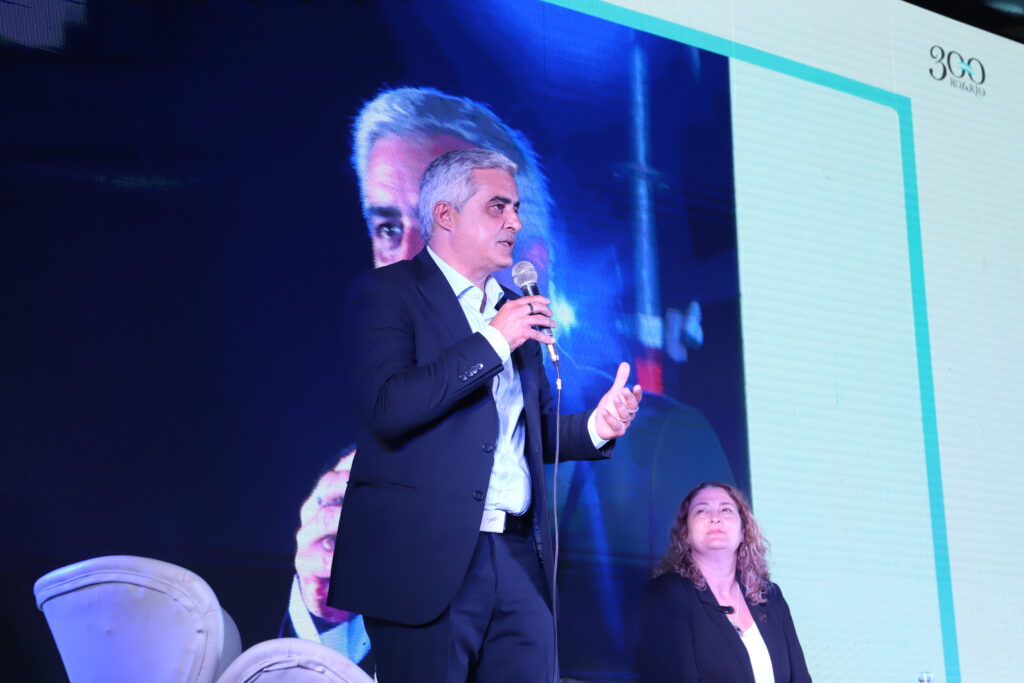
Furthermore, Bartolacci emphasized the need to value and defend public health and education. “This, which we often normalize, also happens with excellent public education, with excellent public higher education, which we often normalize because it is so common,” he noted. Therefore, he considered that “we must repeatedly emphasize it as extraordinary, especially in the world we live in.” He concluded: “It's not the same; because of that history, because of this present, and because of the deep conviction that this is what changes and transforms people's lives, we must continue working to guarantee it.”
Participating in the Congress are professionals from the UNR Public Health Department, as well as professionals from various health-related faculties at the University.
Mayor Pablo Javkin explained that the purpose of these two sessions "is to work and discuss horizontally the challenges facing the Public Health System, which, as the story clearly describes, is always up to the task of addressing the new challenges of these times."
He also highlighted the current advances and challenges of public health in the city, emphasizing that "it is impossible today to think of public health strictly from a health perspective," as it involves social, environmental, and cultural aspects. He noted that many of the challenges of 2013 remain, while new ones have emerged, such as the growth of issues related to mental health, neurological diseases, and the prolongation of human life, which requires comprehensive care policies. "Public health encompasses a political project that is neither partisan nor temporary," he affirmed, while also raising the need to integrate development, cultural, and health centers in a single space and strengthen interaction with the educational system.

Javkin also warned about the difficulties posed by the national government's decision to withdraw from public health management, which affects key areas such as vaccination, cancer medications, and mental health. "We will never withdraw from providing public health services," he asserted, emphasizing that this context poses the challenge of ensuring access and health planning in a country that is dismantling its health policies.
The Congress's thematic axes focus on the challenges of public policies to reduce social inequalities in health, the territorial approach as a priority that governs the system, the efficiency of organizations in defining and constructing the problem, the challenges of integrated health systems: financing, organizational and management models, and the role of information and communication in health policy design.
Silvia Ciancio, a medical graduate from the UNR and current Minister of Health of the Province of Santa Fe, praised the meeting, which she had participated in many times as a healthcare worker. “I think this should be a space where we can once again talk about certain issues, such as the right to health, which is being discussed like never before, especially by the national executive branch. I know healthcare workers are going through a difficult time, but I want to ask them to consider what we have in our province—something that doesn't happen everywhere, and if we don't defend it, it could be lost. The challenge facing the healthcare sector in Santa Fe is enormous.”
Finally, the Secretary of Public Health, Soledad Rodriguez, emphasized that "the main themes of this conference are the issues the Municipal Health Department addresses every day, so we are very pleased with this large turnout. This meeting would not be possible without the diverse group of healthcare workers in the city and province. They are passionate about ensuring a public health service that provides solutions to the problems facing our society."
Also present at the opening were the President of the Municipal Council, María Eugenia Schmuck, the national representative Mónica Fein, the senator of the Rosario Department, Ciro Seisas, members of the Provincial and Municipal Executive, city councilors, representatives of the Public Health Area of the Universidad Nacional de Rosario, and representatives of professional associations, mutual insurance companies and institutions linked to health training.
Journalist: Gonzalo J. García/Photographer: Camila Casero.