



UNR historian Sofía Roizarena was recognized for research that debunks myths about the role of women in the Argentine countryside.
Conicet fellow and ISHIR researcher, Sofía Roizarena was awarded the TOYP 2025 Prize. Her work reconstructs the history of women who, a century ago, managed agricultural empires of 45.000 hectares, challenged governors and managed million-dollar businesses, although official history only remembers them for their charitable works.
The image is a classic of national iconography: the rancher, the farmhand, the gaucho. A world of men forging the nation's wealth on horseback. If a woman appeared, she was usually on the ranch's veranda, serving tea or embroidering, detached from the rustic business of the land. However, this picture is incomplete. Behind the scenes of the Argentine Pampas, there were women who not only inhabited the countryside but ruled it with a firm hand.
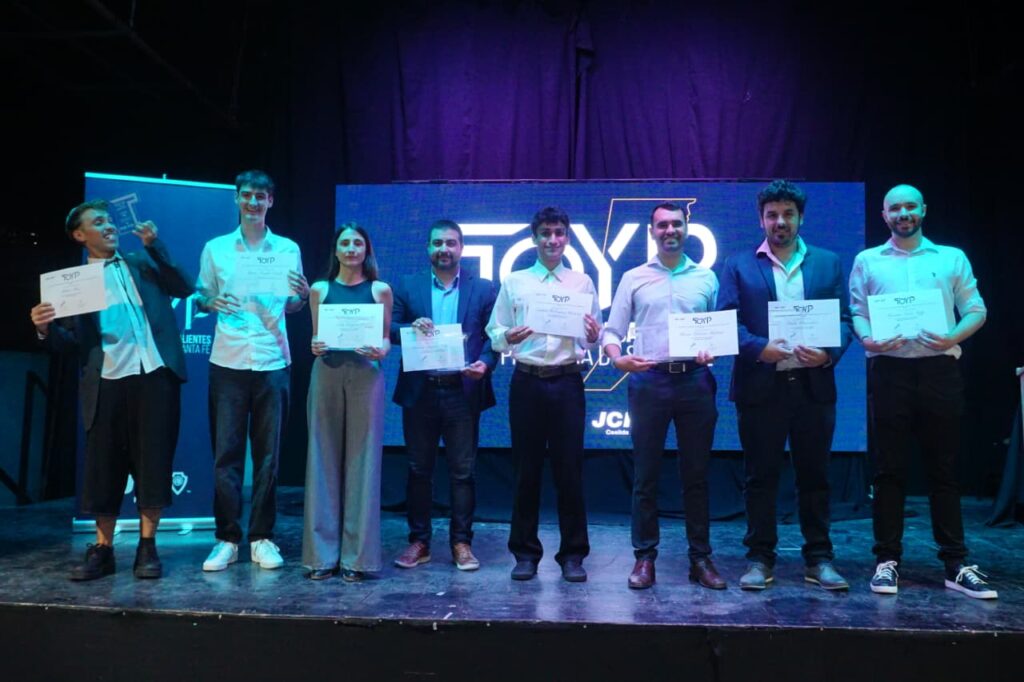
Recovering these silenced histories is the mission of Sofía Roizarena, a history graduate and CONICET fellow at the Institute of Regional Socio-Historical Research (ISHIR). Her work, which combines archival rigor with a necessary gender perspective, was recognized last Thursday, November 27, during the TOYP 2025 Awards ceremony (Ten Outstanding Young Persons). There, the Junior Chambers of Rosario and Casilda distinguished her in the category of “Leadership and Academic Achievements,” naming her one of the ten outstanding young people in the province of Santa Fe.
A lineage of invisible women
The seed of Roizarena's research has an almost cinematic quality, born from family memory. Her grandparents lived and worked on a ranch in southern Córdoba that, curiously, was owned by two women: Dolores Cobo and her daughter. While academic historiography told her that women delegated power, the oral tradition of the ranch's older workers told a different story: they spoke of "the bosses" with a mixture of deference, loyalty, and professional respect that didn't fit the image of a passive lady.
“There have always been women in the countryside. The problem was the narrative that made them invisible,” explains Roizarena. Her research, which covers the period from 1910 to 1966, focuses on business history, a discipline that seeks to understand how capital was managed beyond anecdotes.
As Roizarena delved into the archives, she encountered an epistemological obstacle: the sources lied, or at least concealed the economic truth. If one examines magazines of the time, such as the popular weekly Caras y Caretas, these elite women appeared in the society pages, highlighted for their philanthropy, their religiosity, or their trips to Europe. No one mentioned their business dealings.
However, when this data was cross-referenced with court records, probate proceedings, and wills, the other side of the story emerged. Dolores Cobo not only inherited land; after becoming a widow, she took direct control of 45.000 hectares. Far from leasing the land to live off the rents—what was expected of a woman to “minimize risks”—she dedicated herself to livestock production, specializing in Hereford cattle breeding and expanding her holdings. “If this were the case of a man, we would be talking about an extremely successful business career,” the researcher concludes.
One of the most fascinating aspects of Roizarena's work is the analysis of civil status. Before the 1926 reform of the Civil Code, a married woman in Argentina was, for legal purposes, almost a minor: she could not manage her own property without her husband's permission.
In this context, the death of a husband paradoxically became an administrative liberation. “The status of widow allowed for a framework of autonomy that married women did not have,” the historian explains. It was in this marital status that figures like Dolores Cobo's mother, Inés Salas, and later Dolores herself, displayed their leadership skills, making investment and management decisions that their husbands, while alive, had monopolized.
This power wasn't confined to the confines of her ranches. Roizarena's research, part of her master's thesis, documented an extraordinary lawsuit in the 30s. When the governor of Córdoba, Amadeo Sabatini, implemented progressive taxes against large landowners, Dolores Cobo didn't remain passive. She sued the province, arguing that the taxes were confiscatory. The case reached the Supreme Court of Argentina, where the rancher obtained a favorable ruling, demonstrating that her political influence and networks (she was related to the Anchorena family) were as lethal as those of any patriarch of the Argentine Rural Society.
The value of the Humanities in times of crisis
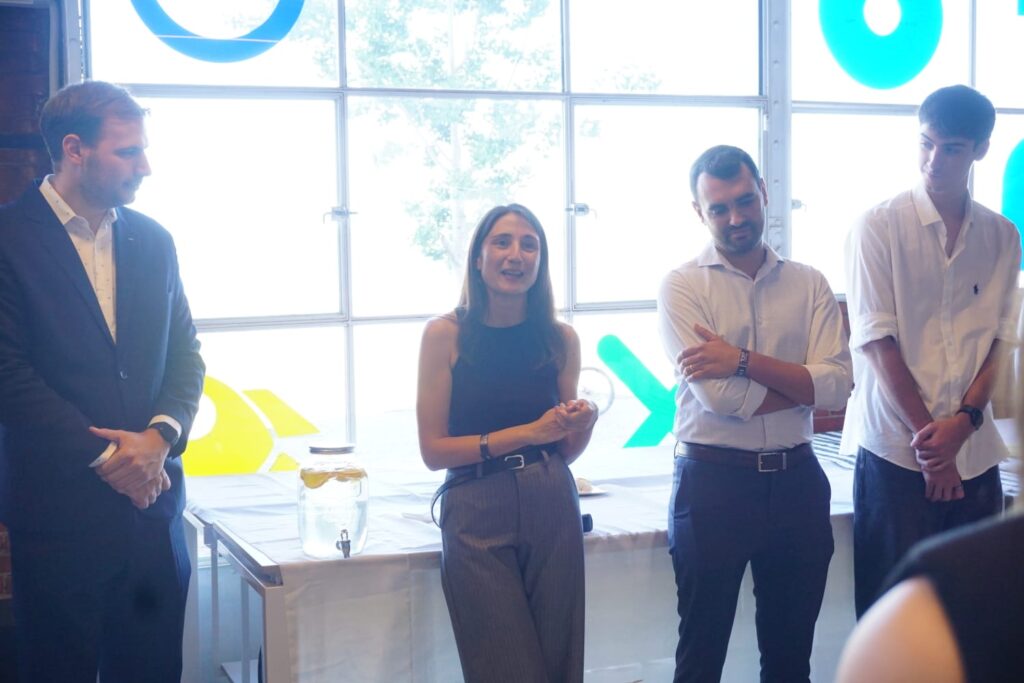
The TOYP Award comes at a pivotal moment for Argentine science. Roizarena confesses that the distinction was a “relief” in the face of discourses questioning the usefulness of social science research. “Sometimes you wonder if what you do has any impact on reality. This award confirms that our science is useful,” he reflects.
The enduring relevance of her work was confirmed at the awards ceremony itself. A woman approached her and introduced herself as an “agricultural producer,” confessing that she had always thought women's role was secondary. “Even today, many rural women say 'I accompany my husband,' when in reality they are working alongside him. There's no awareness that this is work because it isn't always paid,” Roizarena observes. Her thesis, then, not only speaks to 1920, but also challenges the identity of rural women in 2025.
Far from closing the chapter, the historian is promoting new lines of research for her doctorate and already has her sights set on the other branch of the family, where the story becomes darker and more dramatic.
The new focus is on a 1914 case that scandalized Buenos Aires society: an heiress from the Cobo family who, after filing for divorce from her husband (an Anchorena), was sued by him on the grounds of "insanity." At that time, declaring a woman "insane" was the most effective legal means of stripping her of control over her assets. The outcome was tragic, with her suicide and her husband keeping the fortune.
“One shouldn’t dwell on the anecdotal,” Roizarena warns, “but these extreme cases allow us to see how the patriarchal system operated when a woman tried to break the mold.”
With a background that includes the National Academy of History Award (2023) and a research stay at the University of the Andes in Colombia, Sofía Roizarena is establishing herself as a leading figure in historiographical renewal. Her work reminds us that Argentine economic history was not written solely by men, but also by tenacious widows who, amidst mourning and business, were able to take control of their own destiny.
Journalist: Victoria Arrabal