



For the first time, starting this year, this day is commemorated every third Thursday of May with the aim of strengthening institutional policies on accessibility, inclusion, and human rights.
La Universidad Nacional de Rosario (UNR) commemorated the first University Accessibility Day, a day promoted by the Human Rights Department and the Center for Inclusive Design (CEDIN), with the aim of raising awareness and promoting the rights of people with disabilities in the university setting.
“Indeed, the declaration of this day is a political and principled declaration of the Universidad Nacional de Rosario "Based on our convictions about what our university and the public university system should be. In a painful climate of our times, at a time in humanity where everything is discussed as it is, where everything seems to be valued based on its monetary value, regardless of anything else, where we have to return to seeing in government resolutions primitive arguments for addressing these problems that we thought were long gone, the fact that we can come together to ratify a path we have been building is truly a declaration of principles," argued Rector Franco Bartolacci.
He also highlighted university unity in key areas and the deep conviction regarding the transformative nature of education and access to it as a right. “What changes our lives, what transforms us, is the possibility of access to education. We said a long time ago that we must work so that the University can be present where it is not yet present, because it is not present in many places, because it is often a palace of closed knowledge, and we must work so that those who cannot yet access public universities can do so. And with that conviction, we embrace what I understand to be a cultural change that allows us to bring about these transformations. Things happen, they transform in profound and lasting ways to the extent that communities accept that there is a common horizon and a path to follow collectively to make that horizon possible.”
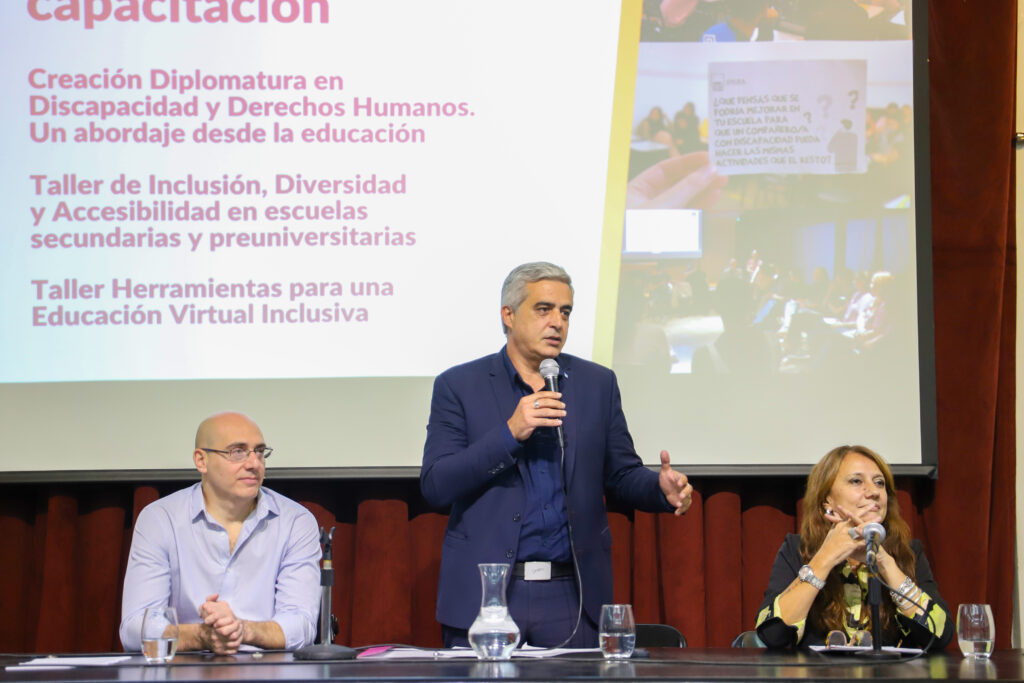
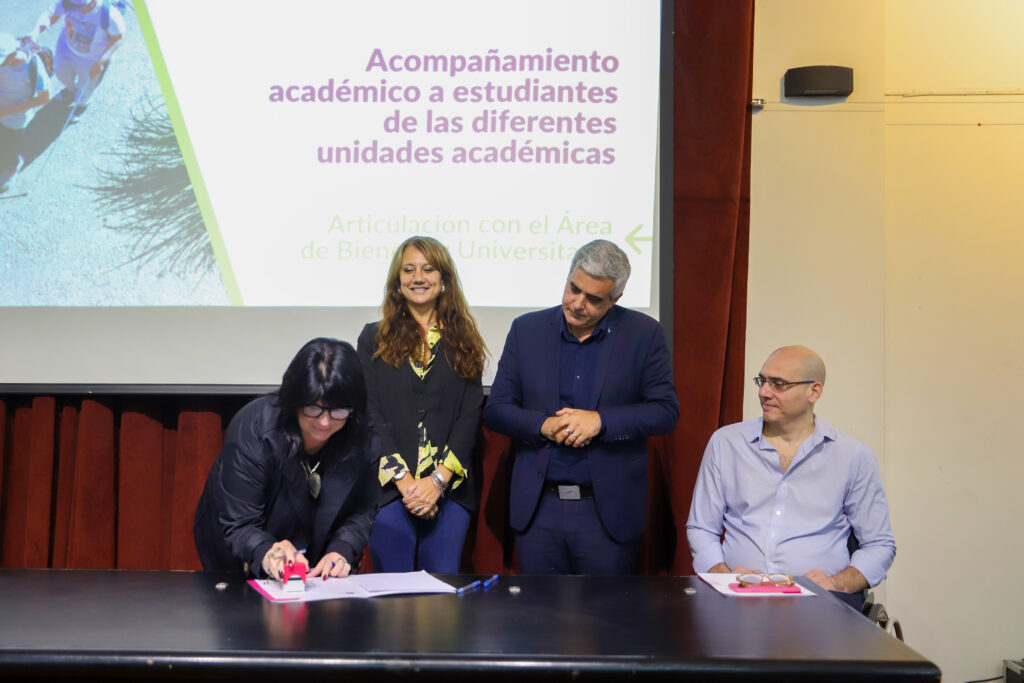
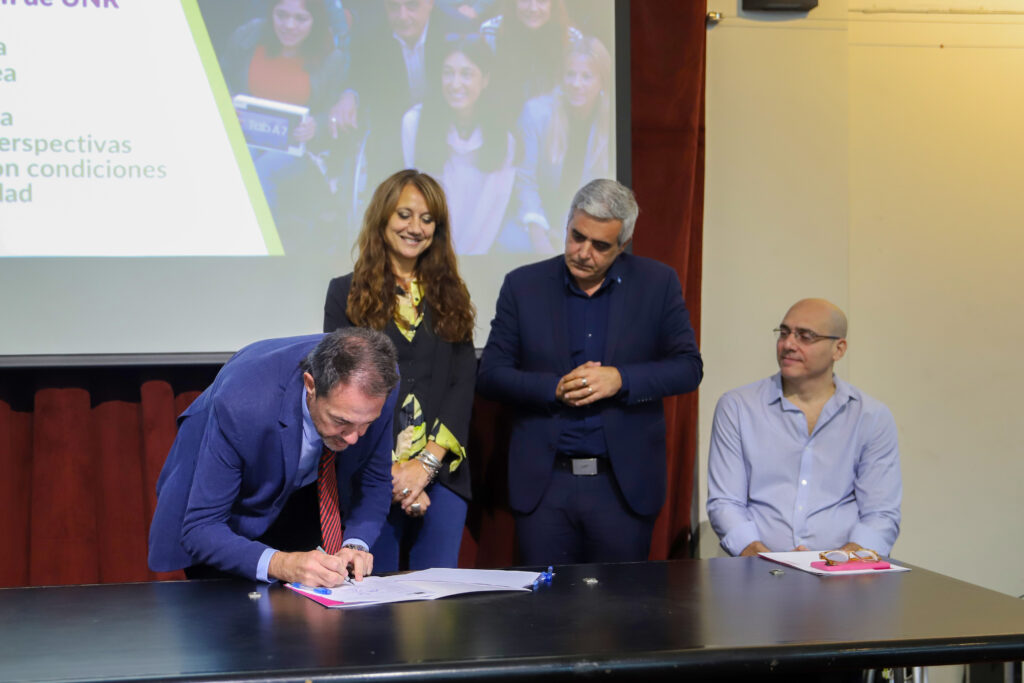
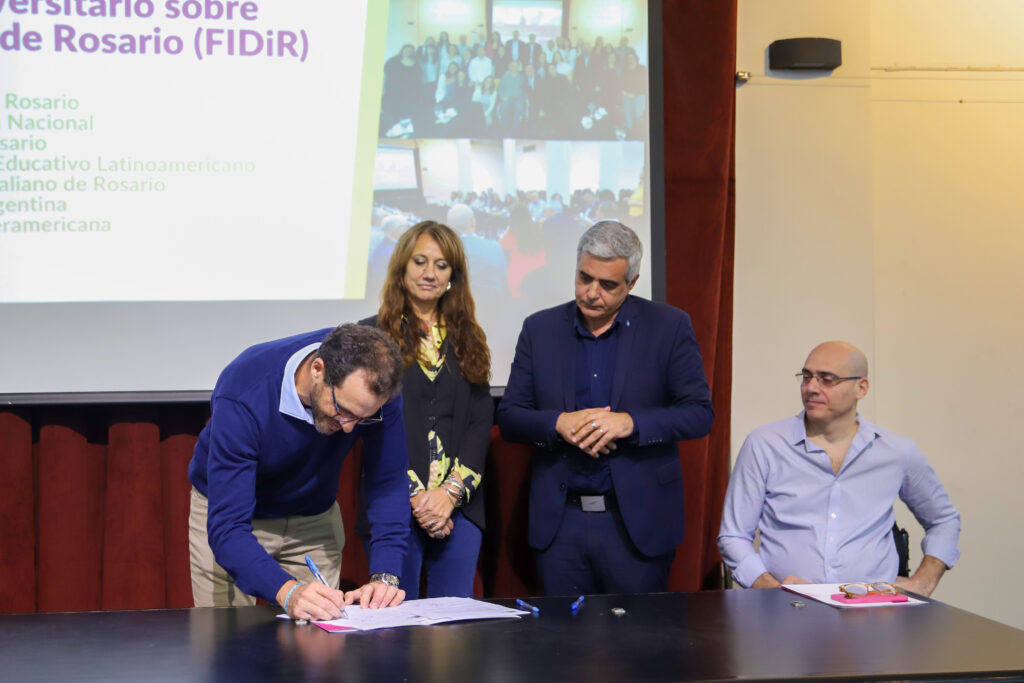
The event took place at the University's Government Headquarters and was attended by students, faculty, and authorities. Within this framework, Rector Bartolacci led the signing of a Memorandum of Understanding between the Deans of the various academic units and the Directors of the Pre-University Schools, as part of an institutional commitment to support University Accessibility Day.
“I think it's wonderful that this agreement we're going to sign today is based on the experience of those who have already made it. Many times, as a University, we've declared principles, positions, and considerations regarding an issue that were subsequently not translated into concrete institutional or academic policies. We made the decision to step back from that position, to fulfill and implement our commitments, on all issues, and one of those involved expanding accessibility policies. An accessible University implies, no more and no less, that everyone who wants to inhabit it has the right to do so effectively guaranteed, and that especially concerns those of us who hold the greatest responsibility,” the Rector emphasized.
The creation of this day responds to the UNR's commitment to the International Convention on the Rights of Persons with Disabilities, with the principle that accessibility is not only a technical requirement, but a right and an ethical imperative that impacts all aspects of institutional and social life. "We felt it was extremely important that the University, as a result of the work of our entire community over so many years and based on everything built from the institutional policies that have been implemented programmatically, create our own day to raise public awareness, to generate visibility, and to continue delving deeper into this issue that calls us together from a human rights perspective. We are here to raise awareness that still needs to be built, because we still have to unlearn models, patterns, stereotypes, and ways that have historically shaped our society and our culture," explained Paula Contino, head of the Human Rights Area.
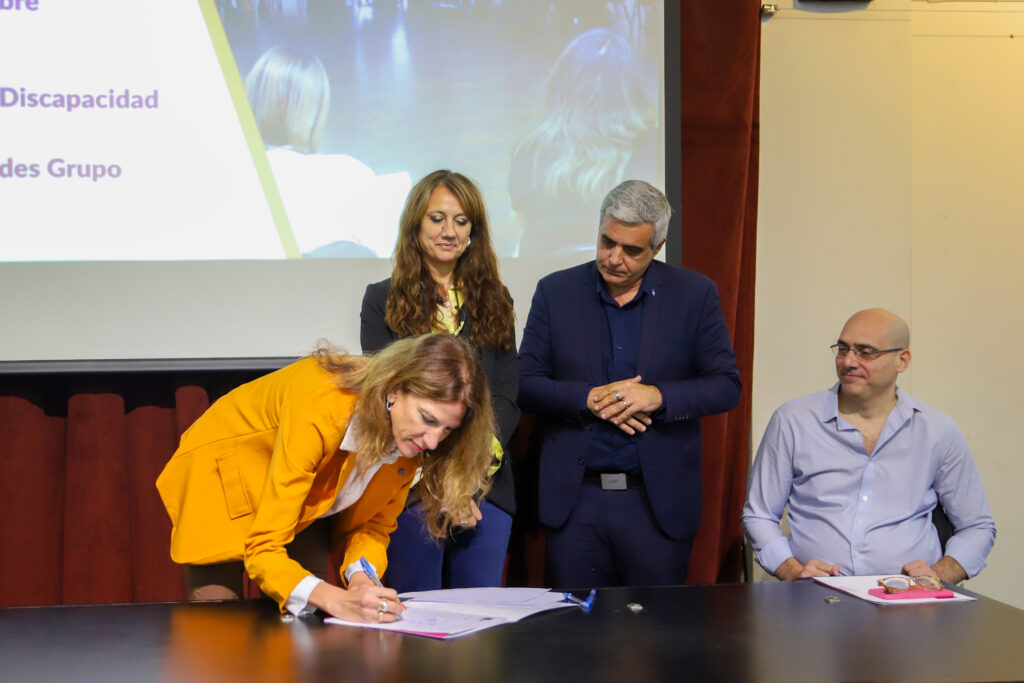
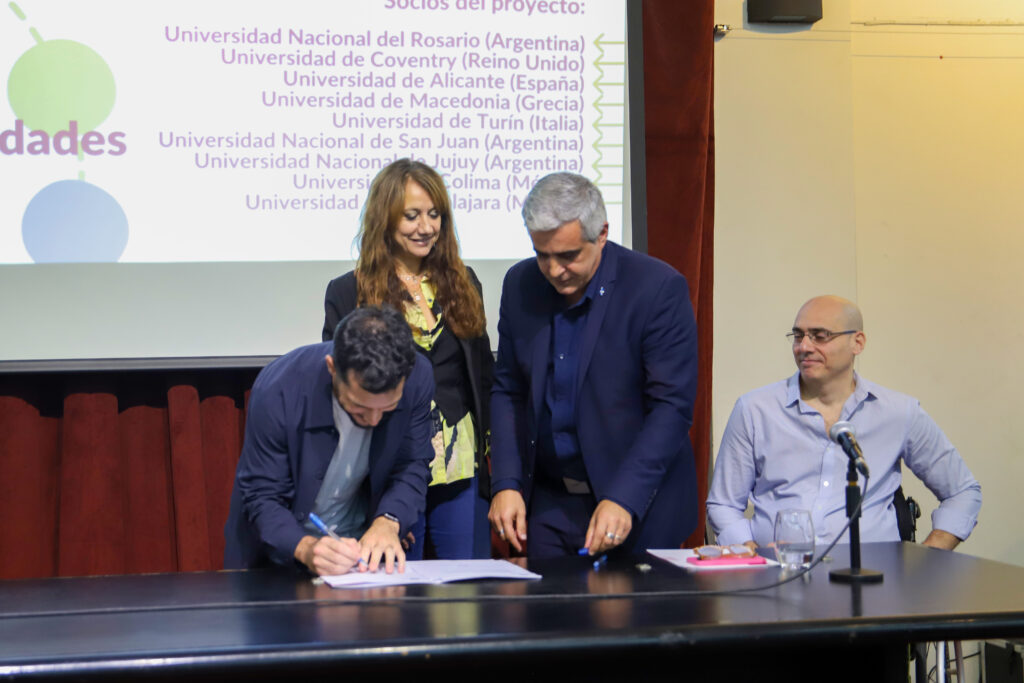
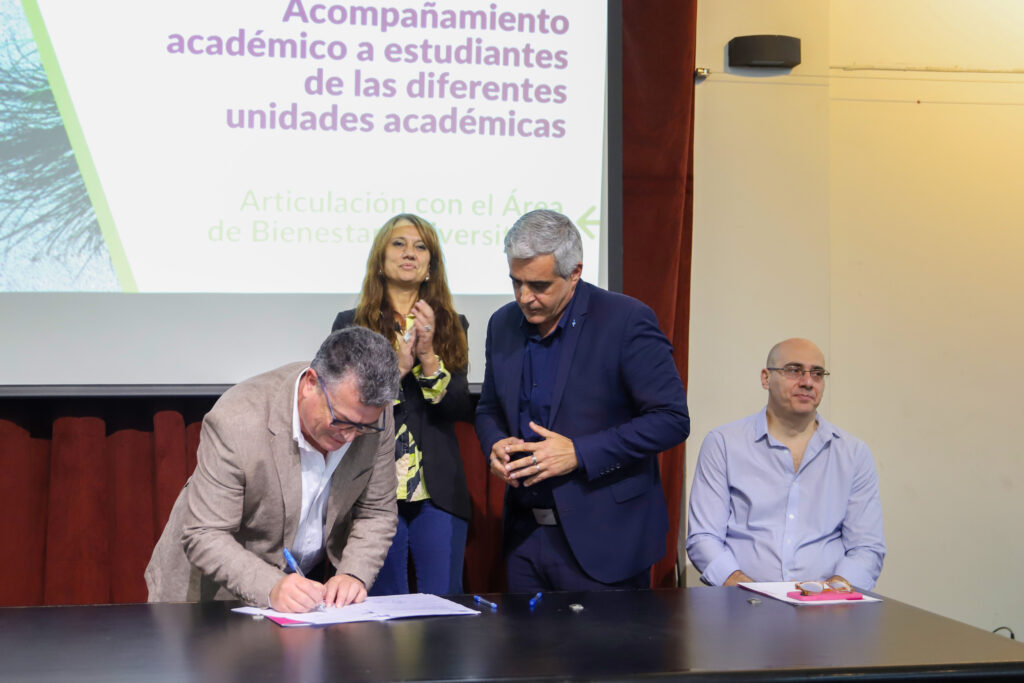
He also called for a deeper focus on daily work on accessibility and emphasized that this will only be possible "if we continue on this path, working increasingly with people who live with material, cultural, and other barriers."
For his part, Guillermo Dos Santos, Director of the Engineering Center for Inclusive Design, emphasized that accessibility has been addressed in many areas of the University, which demonstrates the priority it occupies in collective development. “We are constantly seeing commitment, especially from students, to this issue. A cultural and academic shift is clearly evident. Students first educate themselves, absorb it like sponges, and apply it. I think this is the most important thing because we have stopped thinking of accessibility as something technical, referring only to people with disabilities, but rather we see it in general terms for all people, including older adults, people of short stature, etc. The significant change is being able to understand that this benefits us all.”
During the meeting, recognition and certificates were presented to students and graduates from the twelve faculties who participated in valuable accessibility initiatives aimed at raising awareness and promoting the rights of people with disabilities, based on their educational journeys or social practices.
There was also an exhibition of posters produced by students from the Advanced Technology Department of the Industrial Design Program and from the Inclusive Design and Accessibility elective at the Faculty of Architecture, Planning and Design (UNR), Graphic Visual Communication I, and Tourism and Accessibility at the Faculty of Political Science and International Relations.
Journalist: Gonzalo J. García/ Photographer: Camila Casero.