



Unicanal and the Municipal Council launched a campaign to prevent and raise awareness about the risks of online betting.
Three teenagers are in the back seat of a car placing bets online from their cell phones. The mother is behind the wheel, she watches them in the rearview mirror very focused but without knowing what they are doing and she asks them: Is everything okay? This is a prevention and awareness campaign about the risks of online betting, especially among young people between 12 and 18 years old, carried out by the UNR Unicanal channel for the Municipal Council of Rosario. There are three spots designed to warn and discourage these practices and to promote the search for help. The strong message with which each one closes is: “Betting is never a game. Break the silence. I asked for help".
For the UNR Psychiatrist and Rosario Councilor Lucas Raspall, betting has always existed, legal and illegal, but what changed history today is the possibility of making them online through the mobile phones to which the kids are connected. between seven and eight hours a day, so it is absolutely easy for them. In addition, it is promoted by big brands, cups, tournaments, t-shirts, which results in a “naturalization of the bet” that makes it look like something entertaining, cool and they get hooked. “They start playing and then the problems come,” he explains.
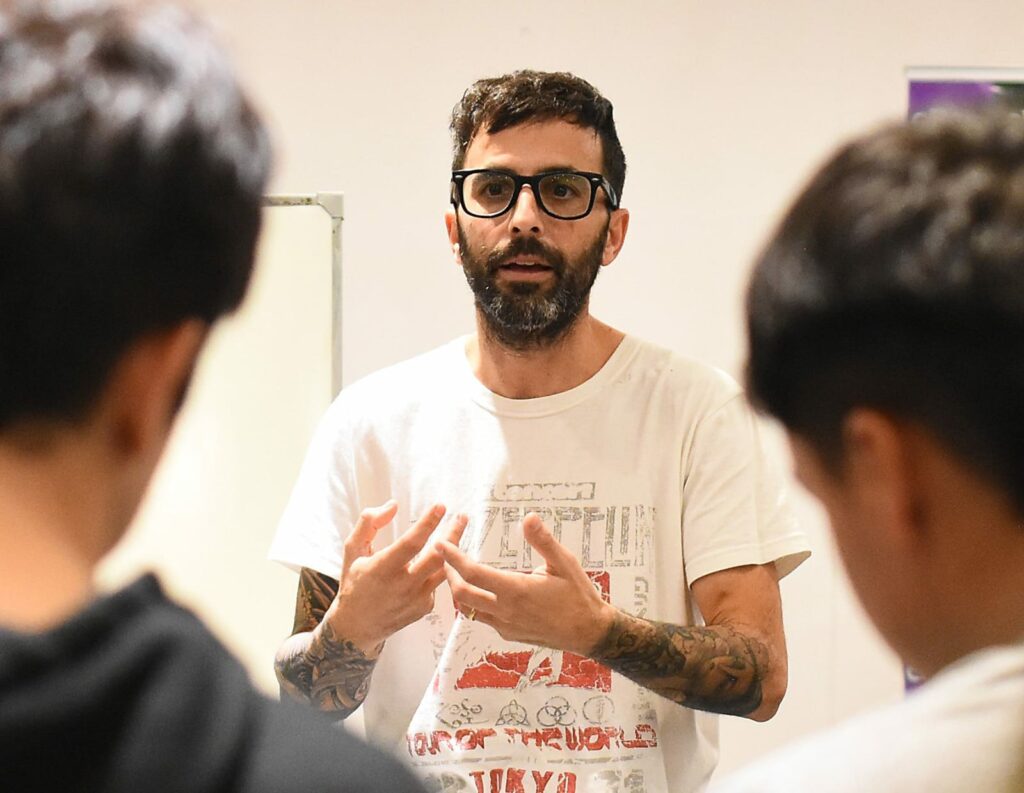
Statistics show that they gamble a lot at night at home, locked in their room. But where it began to become visible was in the school, which “is a sounding board and there all the phenomena bounce off the walls and take on another volume.” The difference between what happens in a home that is a private environment compared to what happens at school is that you end up seeing it. “Since last year and this year it just exploded, many kids were first seen gambling during recess and then also in the classroom,” says the teacher.
As occurs with substance consumption, this practice is more frequent in men who tend to “a somewhat more exacerbated exploratory behavior with a little less restraints and social controls” and on the other hand, most of the bets come from houses of sports and particularly football, then "they are more trapped and are a much easier target than women, which does not mean that they also gamble but in general they have a different range of consumption."
In neuroscience terms, these consumptions hijack the reward circuit and end in an addiction. But the psychotherapist affirms that it is not necessary to talk about gambling addiction to understand that an online bet is a problem from minute zero. He explains that an addiction may not develop, but in two, three or four bets that young people make, it may happen that they lose what they do not have, ask for a loan from someone to save them, start lying to cover their debts and cannot do it. , as in any casino gambling story.
A national survey on online betting among minors promoted by three public universities in the province of Buenos Aires that applies to young people between 15 and 21 years old, produced partial data that shows a worrying trend: between 30% and 40% of The young people surveyed admit to betting on online platforms, which represents a significant number, especially among minors, ages 12 and up, who access through their mobile devices.
The local NGO “ If We Laugh, We All Laugh” is participating in this survey, which is being conducted via a digital form accessible by QR code. The survey aims to gather accurate data on the prevalence of and motivations behind these practices among young people. The president of this civil association, Aristides Álvarez, pointed out that aggressive advertising on social media and the involvement of public figures exacerbate the problem. He also emphasized the need to involve schools in education about digital citizenship and the risks associated with compulsive gaming. “It is crucial that responsible adults and the government take a more active role in raising awareness and regulating these platforms.”
What can adults do about this problem? “The bottom line is always education,” says Raspall and clarifies: “It is not the simple and concrete tool that everyone would want but there is no other, the tool will always be education.” It has to do with open dialogue at home and a lot of trust, understanding that sometimes there are situations that arise in one way and become a problem in a short time. And at school, prevention is through talks and activities. “In education, in upbringing, there have to be limits and reservations. “Or they learn to say no to things that hurt them or they expose themselves to risks and harm,” he says.
Something that the psychiatrist considers important is that adults know the problem. “I found out, learning and going deeper by listening to them, I had no idea how this worked, how the channels are set up, how the betting rounds are opened, that there are ATMs, that there are kids who charge, who put it on the market. payment, they know all the media that facilitate this bet, we don't," he says and highlights: "You have to listen a lot to learn and to be able to teach."
The Municipal Council has been debating this issue in committees and there will soon be a public hearing. In this context, it was decided to carry out a campaign to raise awareness among citizens. With the professional advice of Lucas Raspall and under the direction of Héctor Molina, the UNR Unicanal channel produced three short films. A mother and a teenage son present themselves in everyday situations such as traveling by car with siblings and friends. The boys are in the back seat very focused on their mobile phones and finally it is revealed that something is happening there. We sought to synthesize a story that is addressed to both parents and children and that reaches them through the media they usually use, through social networks, radio or television, with a final message: “Let's talk.”
Journalist: Victoria Arrabal/Photographs: Unicanal and Lucas Raspall